
Skin health
Acne scars and pigmentation are not the same problem
Both show up after a breakout, both make the mirror less fun, but they sit in different layers of skin and respond to different treatments. If you live in the UAE, sun exposure and darker skin tones add another layer to the story. Here is what actually separates them, and what works.
The quick difference: texture vs colour
The simplest test is to run a clean fingertip over the mark with your eyes closed. If you can feel a dip, a bump or an uneven surface, that is a scar. If the skin feels smooth but looks brown, pink or purple, that is pigmentation. Pigmentation is a colour problem; scarring is a structural one.
Post-acne pigmentation (PIH / PIE)
- Flat marks, skin feels smooth
- Brown, tan or grey (PIH) or pink-red (PIE)
- Fades on its own in 3 to 12 months
- Sunscreen and topicals speed it up
- Very common in Middle Eastern and South Asian skin
True acne scars
- Textured: ice-pick, boxcar, rolling or raised
- Colour usually matches surrounding skin
- Do not fade on their own
- Need in-clinic procedures to remodel collagen
- Result of deeper cystic or picked lesions
Types of acne scars, and why they form
When a pimple damages the dermis, the body rushes to repair it with collagen. Sometimes it makes too little, sometimes too much. That imbalance is what leaves a permanent mark. According to the American Academy of Dermatologythe shape of the scar depends on how the collagen was lost or added.
- Ice-pick scars. Narrow, deep, V-shaped pits, often on the cheeks. They look like the skin was punctured with a pin.
- Boxcar scars. Wider depressions with sharp edges, similar to chickenpox marks. Common on the temples and lower cheeks.
- Rolling scars. Shallow, wavy dips that give the skin an uneven, rolling look under side light.
- Hypertrophic and keloid scars. Raised, firm scars where the body made too much collagen. More common on the jawline, chest and back, and more likely in darker skin tones.
- Atrophic scars. A general term for any sunken scar caused by tissue loss.
Post-acne pigmentation is different. It splits into two types. Post-inflammatory hyperpigmentation (PIH) is brown or grey and comes from extra melanin, which is why it dominates in Emirati, Arab, Filipino, Indian and Pakistani skin common across the UAE. Post-inflammatory erythema (PIE) is pink or red, from dilated capillaries, and is more visible in fairer skin.

Root causes
What actually makes marks stick around
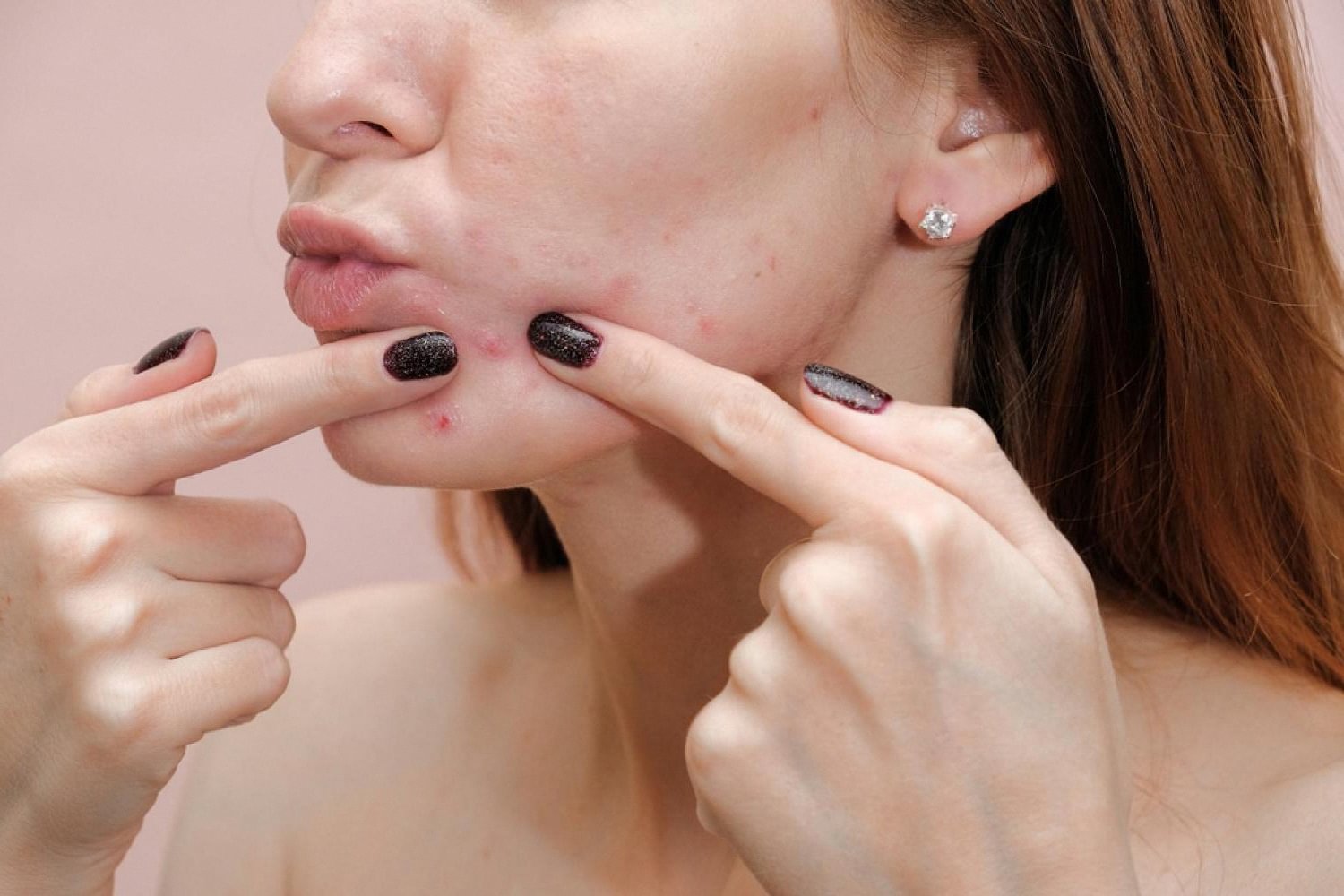
- Picking and squeezing. The single biggest cause of permanent scarring. Pressure ruptures the follicle wall deeper into the skin.
- Delayed treatment. Cystic or nodular acne left untreated for months almost always scars.
- Sun exposure. UV drives melanin production, so pigmentation gets darker and stays longer. UAE sun is intense year round.
- Genetics. Some people scar or pigment more easily. Family history is a strong clue.
- Skin type. Fitzpatrick types III to VI, the range that covers most people in the Gulf, are far more prone to PIH than to redness.
- Hormones and diet. High-glycaemic diets, dairy in some people, and hormonal swings can worsen breakouts, which then leave more marks.
- Stress and sleep. Both raise cortisol, which drives oil production and inflammation.
How dermatologists tell them apart
A good consult takes about 15 minutes. The doctor will look at the marks under bright light, sometimes with a Wood’s lamp or a dermatoscope, and stretch the skin gently. Pigmentation flattens and stays visible. A scar keeps its shape or becomes more obvious when the skin is stretched, because the shadow it casts changes. If you are unsure whether you are dealing with texture or colour, a proper skin specialist can map every mark on your face and build a plan that treats them in the right order, active acne first, pigmentation next, then scars.
Treatment options, recovery and cost in the UAE
Pigmentation is treated with ingredients and light-based devices that break up melanin or calm redness. Scars need procedures that actually rebuild tissue.
| Concern | Common treatments | Sessions | Downtime | Typical UAE cost (per session) |
|---|---|---|---|---|
| PIH (brown marks) | Vitamin C, azelaic acid, tranexamic acid, retinoids, glycolic peels | Daily home use, 3-6 peels | 0-3 days | AED 400-900 for a peel |
| PIE (red marks) | Pulsed dye laser, IPL, niacinamide | 2-4 | 0-2 days | AED 600-1,500 |
| Rolling / boxcar scars | Microneedling with RF, subcision, fractional laser | 4-6 | 3-7 days | AED 1,200-3,000 |
| Ice-pick scars | TCA CROSS, punch excision | 3-5 | 5-10 days | AED 800-2,000 |
| Raised / keloid scars | Intralesional steroid, silicone, laser | 3-6 | Minimal | AED 500-1,200 |
Prices vary between clinics in Dubai, Abu Dhabi and Sharjah, and packages usually work out cheaper than single sessions.
Which treatments are safe for UAE skin tones
Darker skin tones absorb more laser energy and can react with paradoxical darkening if the wrong device is used. This matters a lot in the UAE, where most patients are Fitzpatrick IV to VI. Safer, well-tested choices for medium and deep skin tones include:
- Non-ablative fractional lasers with conservative settings
- Radiofrequency microneedling, which bypasses the melanin issue because it uses heat, not light
- Q-switched Nd:YAG (1064 nm) for pigmentation
- Superficial glycolic, mandelic and lactic acid peels
- Topical tranexamic acid and azelaic acid, both gentle on brown skin
High-fluence IPL, aggressive CO2 laser and strong TCA peels can be risky on brown skin and should only be done by an experienced dermatologist who tests a small patch first.
Do they fade on their own?
Pigmentation, yes, usually. PIH typically fades in three to twelve months if you protect the area from sun and treat the acne underneath. PIE can take longer because it involves blood vessels. True scars, no. Once collagen has been lost or misaligned, only procedures that remodel the skin will change the surface. Waiting a year does not soften ice-pick or boxcar scars.
Prevent permanent marks: what to do next
Treat active acne early
Do not wait for cysts to “go away.” Deep, inflamed spots are the ones that scar. Start topical or oral treatment as soon as breakouts become regular.
Wear SPF 50 daily
Sun is the single biggest driver of pigmentation in the Gulf. Broad-spectrum sunscreen, reapplied every few hours, is not optional if you want marks to fade.
Hands off the face
Picking turns a two-week pimple into a two-year mark. If a spot is painful, ice it or see a doctor for a cortisone injection instead.
When to see a doctor
Book a consult if any of this sounds like you
Marks that have not budged after six months of home care, breakouts that leave a scar every time, deep cysts, or pigmentation that keeps coming back after summer. These are the moments where a dermatologist saves you years of trial and error, and often money too, because the right treatment first time avoids the wrong one three times.
Frequently asked questions
How do I know if my dark spots are pigmentation or scars?
Run a clean finger over the mark with your eyes closed. If the skin feels smooth and the mark is only visible as a colour change, it is pigmentation. If you feel a dip, a bump, or uneven texture, it is a scar. Scars also become more obvious under side lighting, while pigmentation looks the same from every angle.
Does diet, weather or stress make acne marks worse?
Yes, indirectly. High-sugar and high-dairy diets can worsen breakouts in some people, and every new breakout is a chance to leave a new mark. Stress raises cortisol, which increases oil and inflammation. UAE weather adds two challenges: intense UV that darkens pigmentation, and heavy sweating that can clog pores under makeup or sunscreen.
None of these cause scars directly, but they all extend the acne cycle that leads to marks.
Which skin types get more pigmentation vs scars?
People with Fitzpatrick skin types IV to VI, which covers most Emirati, Arab, South Asian and Filipino patients, are far more prone to post-inflammatory hyperpigmentation because their skin produces more melanin in response to injury. They can also develop raised or keloid scars more easily.
Lighter Fitzpatrick I to III skin tends to leave pink or red marks (PIE) and shallow indented scars.
How long does it take to clear acne pigmentation in the UAE?
With daily sunscreen, a targeted topical like azelaic acid or tranexamic acid, and a series of superficial peels, most people see clear improvement in three to six months. Stubborn cases with deep brown patches can take up to a year. Skipping sunscreen resets the clock every time.
Are laser treatments safe for brown or Middle Eastern skin?
Some are, some are not. Q-switched Nd:YAG at 1064 nm, non-ablative fractional lasers on conservative settings, and radiofrequency microneedling are considered safe for medium to deep skin tones. High-energy IPL and aggressive CO2 laser carry a higher risk of paradoxical pigmentation on brown skin and should only be done after a test patch by an experienced dermatologist.
How much do acne scar treatments cost in Dubai?
Typical single-session pricing in Dubai and Abu Dhabi ranges from around AED 1,200 to AED 3,000 for microneedling with radiofrequency or fractional laser, and AED 800 to AED 2,000 for TCA CROSS on ice-pick scars. Most patients need four to six sessions. Clinics almost always offer packages that reduce the per-session cost.
Can I use retinol and vitamin C together for post-acne marks?
Yes, but usually not at the same time of day. A common routine is vitamin C in the morning under sunscreen, and retinol at night. Both help with pigmentation, and retinol also improves mild textural irregularities over months. Start slowly, two or three nights a week, to avoid irritation which can trigger more pigmentation.
When should I stop home treatment and see a dermatologist?
Book a consult if your marks have not improved after six months of proper home care, if every breakout is leaving a scar, if you have deep painful cysts, or if pigmentation keeps coming back after each summer. A dermatologist can confirm whether you are dealing with scars, pigmentation, or both, and sequence treatments in the right order so you do not waste time or money.
Biker, foodie, fender owner, Swiss design-head and holistic designer. Operating at the sweet spot between aesthetics and function to create not just a logo, but a feeling. I prefer clear logic to decoration.